Buy my-chess.eu ?
We are moving the project
my-chess.eu .
Are you interested in purchasing the domain
my-chess.eu ?
domain@kv-gmbh.de · 0541-91531010
Buy my-chess.eu ?
What is the C4 plant strategy for reducing water loss?
C4 plants have evolved a strategy to reduce water loss by minimizing the opening of their stomata during hot and dry conditions. They achieve this by using a specialized carbon fixation pathway that allows them to concentrate carbon dioxide in specific cells, reducing the need to keep their stomata open for extended periods. This concentration of carbon dioxide allows C4 plants to perform photosynthesis more efficiently and with less water loss compared to C3 plants. Additionally, C4 plants are able to carry out photosynthesis at higher temperatures, further reducing water loss by minimizing the time their stomata need to be open. **
How can reducing and non-reducing sugars be detected?
Reducing sugars can be detected using Benedict's test, in which the reducing sugar is heated with Benedict's reagent and a color change from blue to green, yellow, orange, or red indicates the presence of reducing sugars. Non-reducing sugars can be detected by first hydrolyzing them into reducing sugars using acid hydrolysis, and then performing the Benedict's test to detect the presence of reducing sugars. Another method to detect reducing and non-reducing sugars is through chromatography, where the sugars are separated based on their interactions with a stationary phase and a mobile phase, and then visualized using specific detection methods. **

Similar search terms for Reducing
Top-Angebote
Products related to Reducing:
-
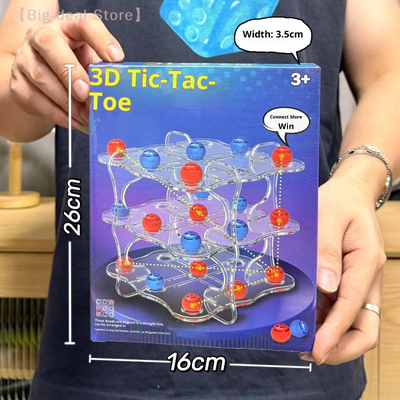
Uplift Picks Triangle Strategy Board Game Chain Chess Family Fun Logic Game 24x21 CmBring excitement to your game nights with this engaging strategy board game designed to challenge your thinking and spark fun competition. Perfect for both kids and adults, this family board game combines logic, planning, and interactive play. Its...47,98 $*Shipping: 0,00 $Secure redirect to the provider


-
Are halogens reducing agents?
No, halogens are not reducing agents. In chemical reactions, reducing agents are substances that donate electrons to other reactants, causing them to be reduced. Halogens, on the other hand, are highly electronegative elements that tend to gain electrons rather than lose them, making them more likely to act as oxidizing agents. **
-
When is sugar reducing?
Sugar is reducing when it undergoes a chemical reaction that breaks down its molecular structure, resulting in a decrease in its overall concentration. This reduction can occur when sugar is heated, such as when caramelizing sugar to make caramel, or when sugar is fermented by yeast to produce alcohol. Additionally, sugar can also be reduced through enzymatic reactions, where enzymes break down sugar molecules into simpler forms. **
-
What are reducing sugars?
Reducing sugars are a type of sugar that have the ability to reduce other substances, particularly by donating electrons. This is due to the presence of a free aldehyde or ketone group in their chemical structure. Common examples of reducing sugars include glucose, fructose, and maltose. When reducing sugars react with certain compounds, they can cause a color change, such as in the Benedict's test for detecting the presence of reducing sugars. **
-
What does reducing mean?
Reducing means to make something smaller, decrease in size, quantity, or intensity. It can also refer to simplifying or streamlining a process or system. In mathematics, reducing involves simplifying a fraction or expression to its simplest form. Overall, reducing involves minimizing or decreasing something to a more manageable or efficient state. **


What is non-reducing sugar?
Non-reducing sugars are carbohydrates that do not have a free aldehyde or ketone group, which is necessary for the reducing sugar reaction. This means they cannot reduce other substances, such as Fehling's solution or Benedict's solution. Non-reducing sugars include disaccharides like sucrose, which is made up of glucose and fructose molecules bonded together in a way that does not allow them to open up and form a free aldehyde or ketone group. **
Is sucrose a reducing sugar?
Sucrose is not a reducing sugar because it does not have a free aldehyde or ketone group that can participate in the reduction reaction. Sucrose is a disaccharide composed of glucose and fructose linked together by a glycosidic bond, which prevents it from being able to undergo the typical reactions of reducing sugars. **
Top-Angebote
Products related to Reducing:
-
Multisell Products Hub Easy To Play Chess Board Game Toy, Educational Strategy Table Games Easy To Play Chess Board Game Toy, Educational Strategy Table GamesEngage Your Mind with a Classic Chess Board Game The Chess Board Game Toy is a timeless strategy game that offers endless fun for both beginners and experienced players. Designed to be easy to play, this game is perfect for improving focus,...49,97 $*Shipping: 0,00 $Secure redirect to the provider
-
MACMILLAN Leadership Strategy and Tactics: Learn to Lead Like a Navy SEALLeadership is the most challenging of human endeavours. It is often misunderstood. It can bewilder, mystify and frustrate even the most dedicated practitioners. Leaders at all levels are often forced to use theoretical guesswork to make decisions and lead their troops. It doesn’t have to be that way. There are principles that can be applied and tenets that can be followed. There are skills that can be learned and manoeuvres that can be practised and executed. There are leadership strategies and tactics that have been tested and proven on the battlefield, in business and in life. Retired Navy SEAL Officer Jocko Willink delivers his powerful and pragmatic leadership methodology that teaches how to lead any team in any situation to victory. Here, you will learn how to: * Deal with egos and the problems they cause * Earn and build trust with both your subordinates and superiors * Instil pride in your team, without creating arrogance * Overcome challenges presented by a micromanaging, indecisive or weak boss * Create a disciplined team that regulates itself * Use leadership as a tool to teach, mentor, train and correct behaviour of team members * Operate at a maximum level of efficiency – and reap the rewards . . . and more. This book is step one towards becoming the commander of your own life. The rest is up to you.8,99 £*Shipping: 2,99 £Secure redirect to the provider
-
Uplift Picks Triangle Strategy Board Game Chain Chess Family Fun Logic Game 24x21 CmBring excitement to your game nights with this engaging strategy board game designed to challenge your thinking and spark fun competition. Perfect for both kids and adults, this family board game combines logic, planning, and interactive play. Its...47,98 $*Shipping: 0,00 $Secure redirect to the provider
-
What is the C4 plant strategy for reducing water loss?
C4 plants have evolved a strategy to reduce water loss by minimizing the opening of their stomata during hot and dry conditions. They achieve this by using a specialized carbon fixation pathway that allows them to concentrate carbon dioxide in specific cells, reducing the need to keep their stomata open for extended periods. This concentration of carbon dioxide allows C4 plants to perform photosynthesis more efficiently and with less water loss compared to C3 plants. Additionally, C4 plants are able to carry out photosynthesis at higher temperatures, further reducing water loss by minimizing the time their stomata need to be open. **
-
How can reducing and non-reducing sugars be detected?
Reducing sugars can be detected using Benedict's test, in which the reducing sugar is heated with Benedict's reagent and a color change from blue to green, yellow, orange, or red indicates the presence of reducing sugars. Non-reducing sugars can be detected by first hydrolyzing them into reducing sugars using acid hydrolysis, and then performing the Benedict's test to detect the presence of reducing sugars. Another method to detect reducing and non-reducing sugars is through chromatography, where the sugars are separated based on their interactions with a stationary phase and a mobile phase, and then visualized using specific detection methods. **
-
Are halogens reducing agents?
No, halogens are not reducing agents. In chemical reactions, reducing agents are substances that donate electrons to other reactants, causing them to be reduced. Halogens, on the other hand, are highly electronegative elements that tend to gain electrons rather than lose them, making them more likely to act as oxidizing agents. **
-
When is sugar reducing?
Sugar is reducing when it undergoes a chemical reaction that breaks down its molecular structure, resulting in a decrease in its overall concentration. This reduction can occur when sugar is heated, such as when caramelizing sugar to make caramel, or when sugar is fermented by yeast to produce alcohol. Additionally, sugar can also be reduced through enzymatic reactions, where enzymes break down sugar molecules into simpler forms. **
Similar search terms for Reducing
-
What are reducing sugars?
Reducing sugars are a type of sugar that have the ability to reduce other substances, particularly by donating electrons. This is due to the presence of a free aldehyde or ketone group in their chemical structure. Common examples of reducing sugars include glucose, fructose, and maltose. When reducing sugars react with certain compounds, they can cause a color change, such as in the Benedict's test for detecting the presence of reducing sugars. **
-
What does reducing mean?
Reducing means to make something smaller, decrease in size, quantity, or intensity. It can also refer to simplifying or streamlining a process or system. In mathematics, reducing involves simplifying a fraction or expression to its simplest form. Overall, reducing involves minimizing or decreasing something to a more manageable or efficient state. **
-
What is non-reducing sugar?
Non-reducing sugars are carbohydrates that do not have a free aldehyde or ketone group, which is necessary for the reducing sugar reaction. This means they cannot reduce other substances, such as Fehling's solution or Benedict's solution. Non-reducing sugars include disaccharides like sucrose, which is made up of glucose and fructose molecules bonded together in a way that does not allow them to open up and form a free aldehyde or ketone group. **
-
Is sucrose a reducing sugar?
Sucrose is not a reducing sugar because it does not have a free aldehyde or ketone group that can participate in the reduction reaction. Sucrose is a disaccharide composed of glucose and fructose linked together by a glycosidic bond, which prevents it from being able to undergo the typical reactions of reducing sugars. **
* All prices are inclusive of VAT and, if applicable, plus shipping costs. The offer information is based on the details provided by the respective shop and is updated through automated processes. Real-time updates do not occur, so deviations can occur in individual cases. ** Note: Parts of this content were created by AI.